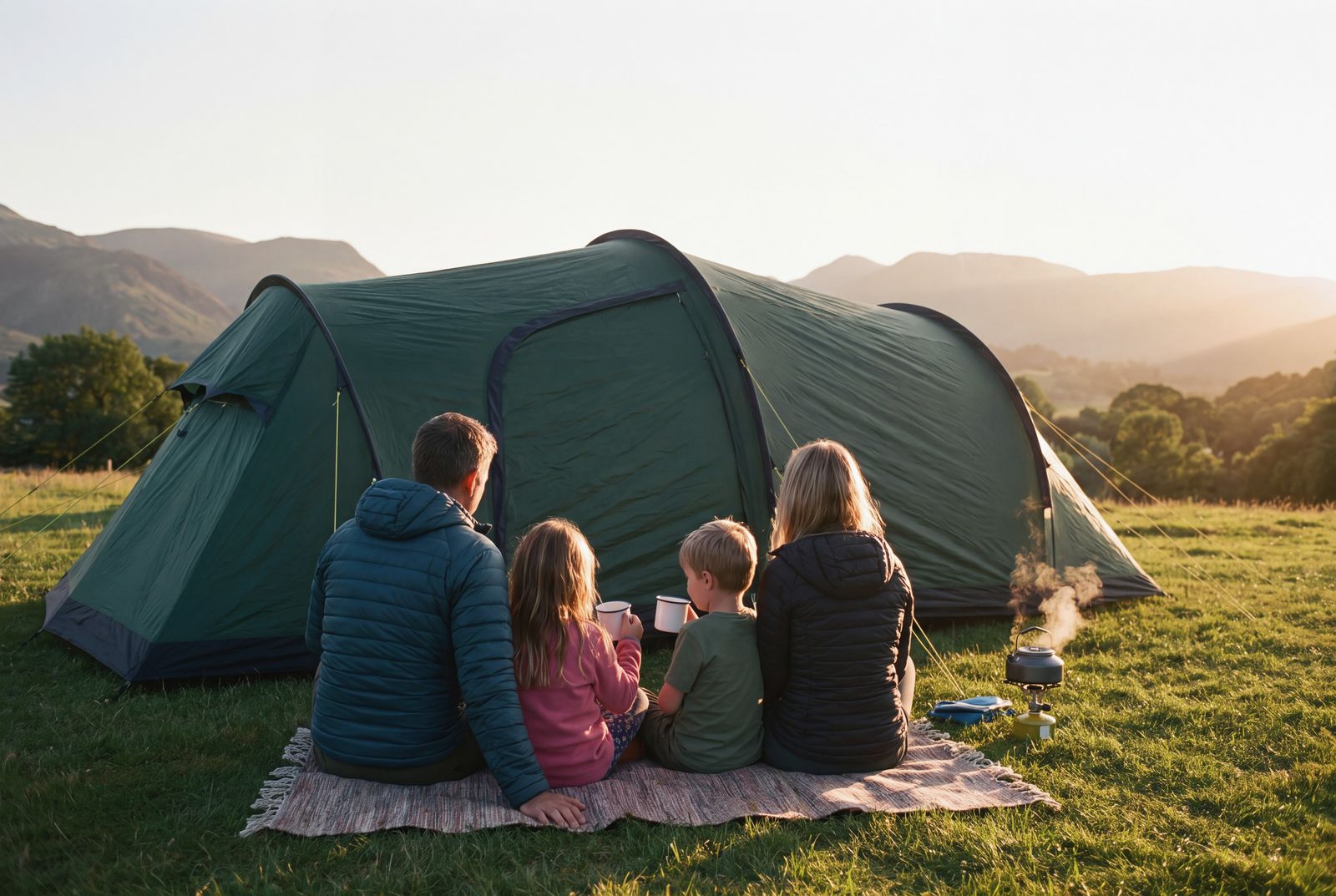
Choosing a family tent
How many berths, air beams or poles, and whether it fits the car and the pitch: what to weigh up before you buy a family tent.
A family tent is a big purchase that most people use for a few weekends and a summer week each year. Before you spend several hundred pounds, it is worth a weekend with a hired one. 52 of our shops have a hire counter. A four to six person family tent costs £60 for a weekend, and if you buy the same model within 30 days we take the hire fee off the price. The details are on our hire page.
Berths and bedrooms
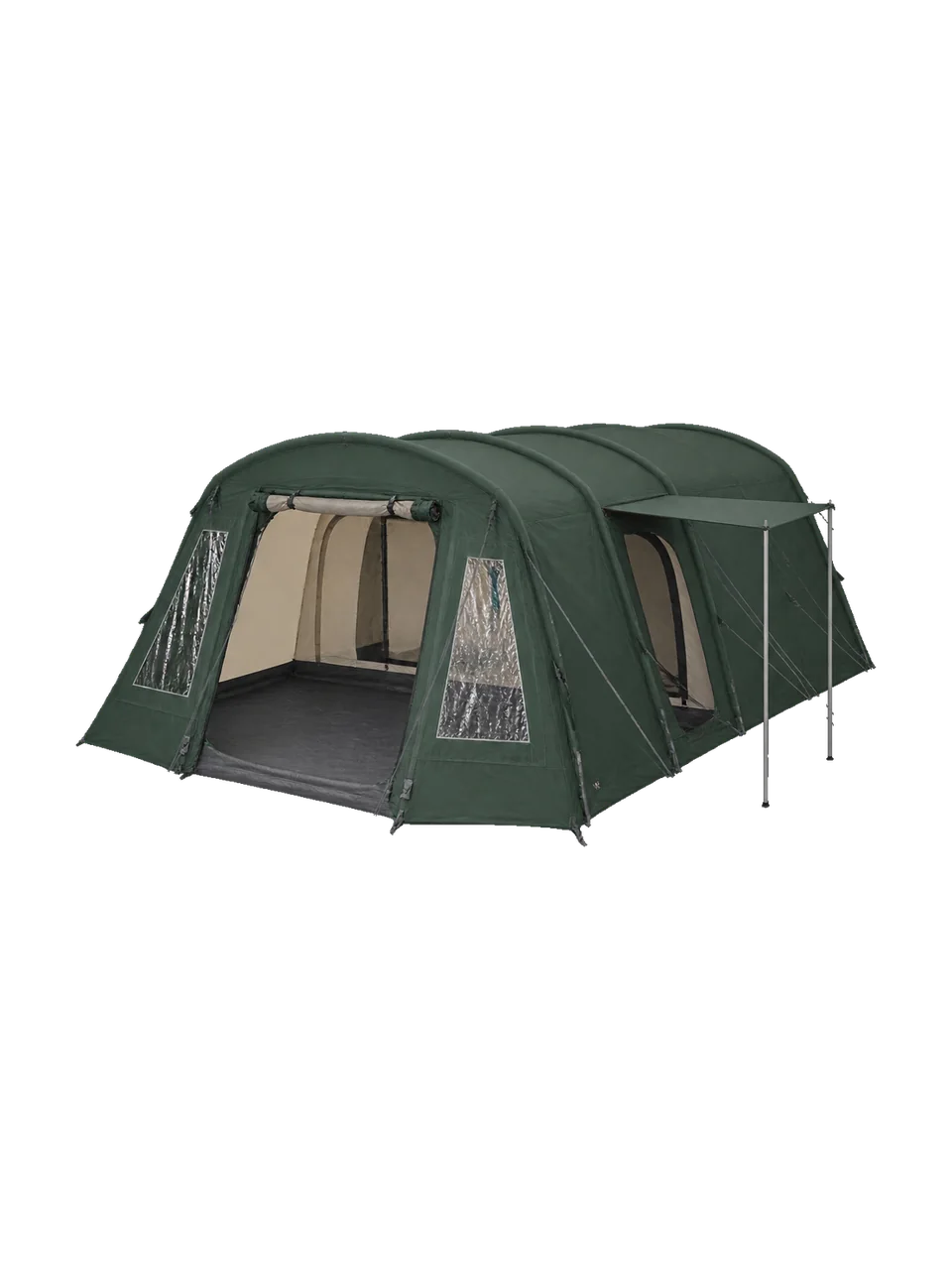
A tent's berth number is how many people fit lying side by side on standard mats, with nothing else in the bedroom. Families with airbeds, bags and a cot usually go up two sizes, so a family of four looks at six-berth tents.
Look at how the sleeping space is split. Separate bedrooms give older children some privacy, and dark inner fabric helps small children sleep through light summer evenings and early dawns. Check the bedroom length too if anyone in the family is tall.
Living space and height
The peak height on the label is the highest point, often around two metres in a six-berth tent. What matters is how much of the living area you can stand up in, so look at the walls as well. Steep sides give more usable room than a tent that slopes down from the middle.
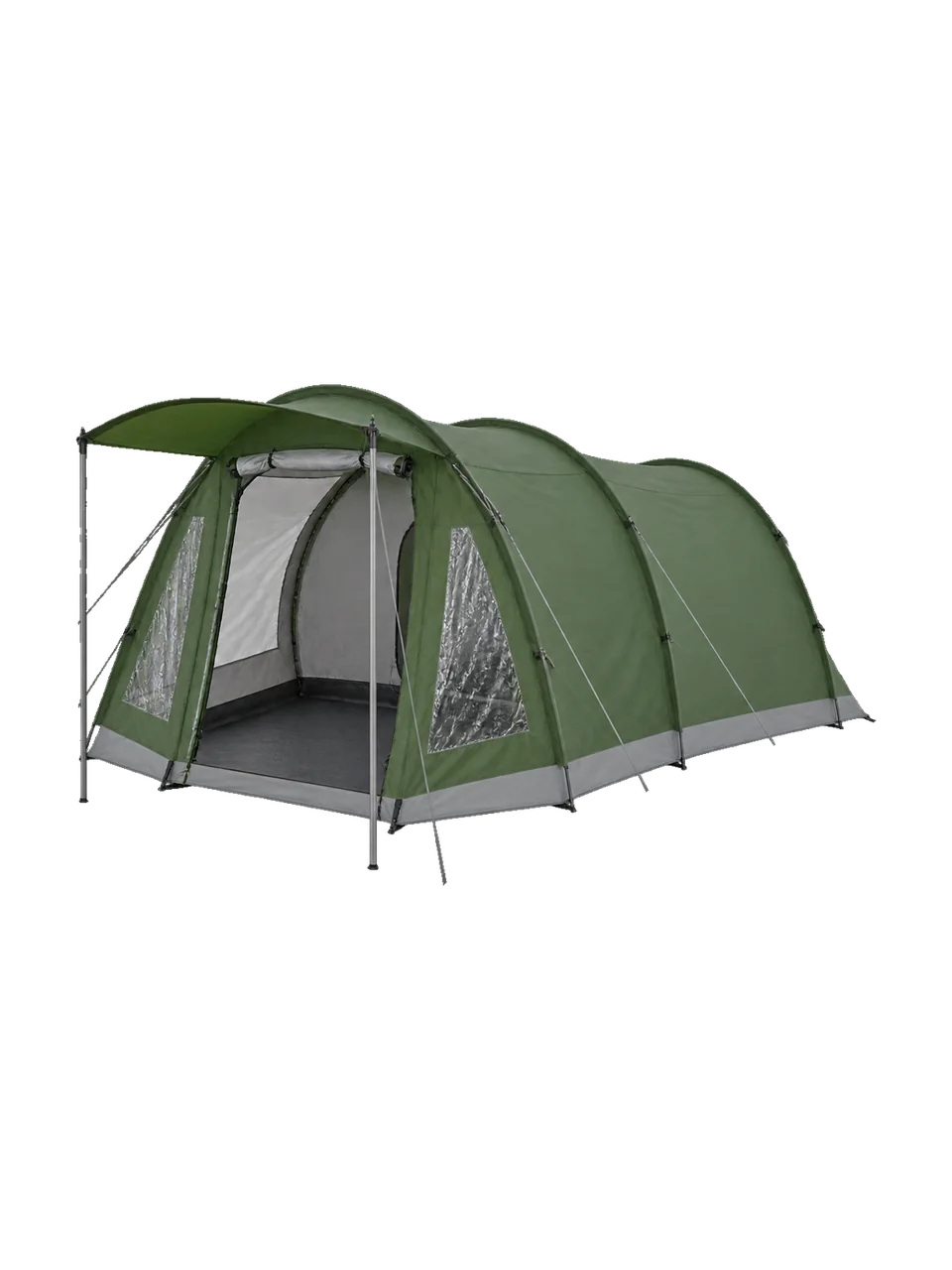
A porch or canopy keeps wet boots and coats out of the living area. Cook outside, never in the tent or the porch, even in rain. A stove or a cooling barbecue inside a tent can fill it with carbon monoxide, which you can't see or smell.
Air beams or poles
Air tents have inflatable tubes instead of poles. You peg out the corners, pump the beams up and the tent stands, which on a six-berth takes one person about 15 to 20 minutes. They cost more, weigh more and pack bigger. A punctured beam can be patched, or the inner tube swapped.
Poled tents are cheaper and lighter for their size, and they pack smaller. They take longer to pitch, especially the first few times. A pole section can snap in a strong gust, but a new section is cheap, and new Hale family tents use standard pole sections that every one of our repair benches keeps in stock.
Fabric and waterproofing
Look for a flysheet with a hydrostatic head of at least 3,000mm for British summer camping, and a groundsheet of at least 5,000mm. A sewn-in groundsheet keeps out draughts, slugs and insects.
Most family tents are polyester, which is light, cheap and dries fast, but gets condensation inside on cold nights. Polycotton breathes, stays cooler in the sun and warmer at night, and is quieter in the wind. It is also much heavier and must be dried completely before you pack it away, or it will go mouldy. A new polycotton tent needs pitching and soaking (a good shower of rain will do) before its first trip, so the cotton swells and seals the stitching.
Weight, size and the pitch
Family tents weigh between about 12kg and 35kg. Check that the packed tent fits in the car with everything else, and think about how far you will carry it from the car to the pitch.
Then check the footprint, guylines included, against the pitch size your campsite gives you. A big tunnel tent with a canopy can take up more ground than some pitches allow.
Wind
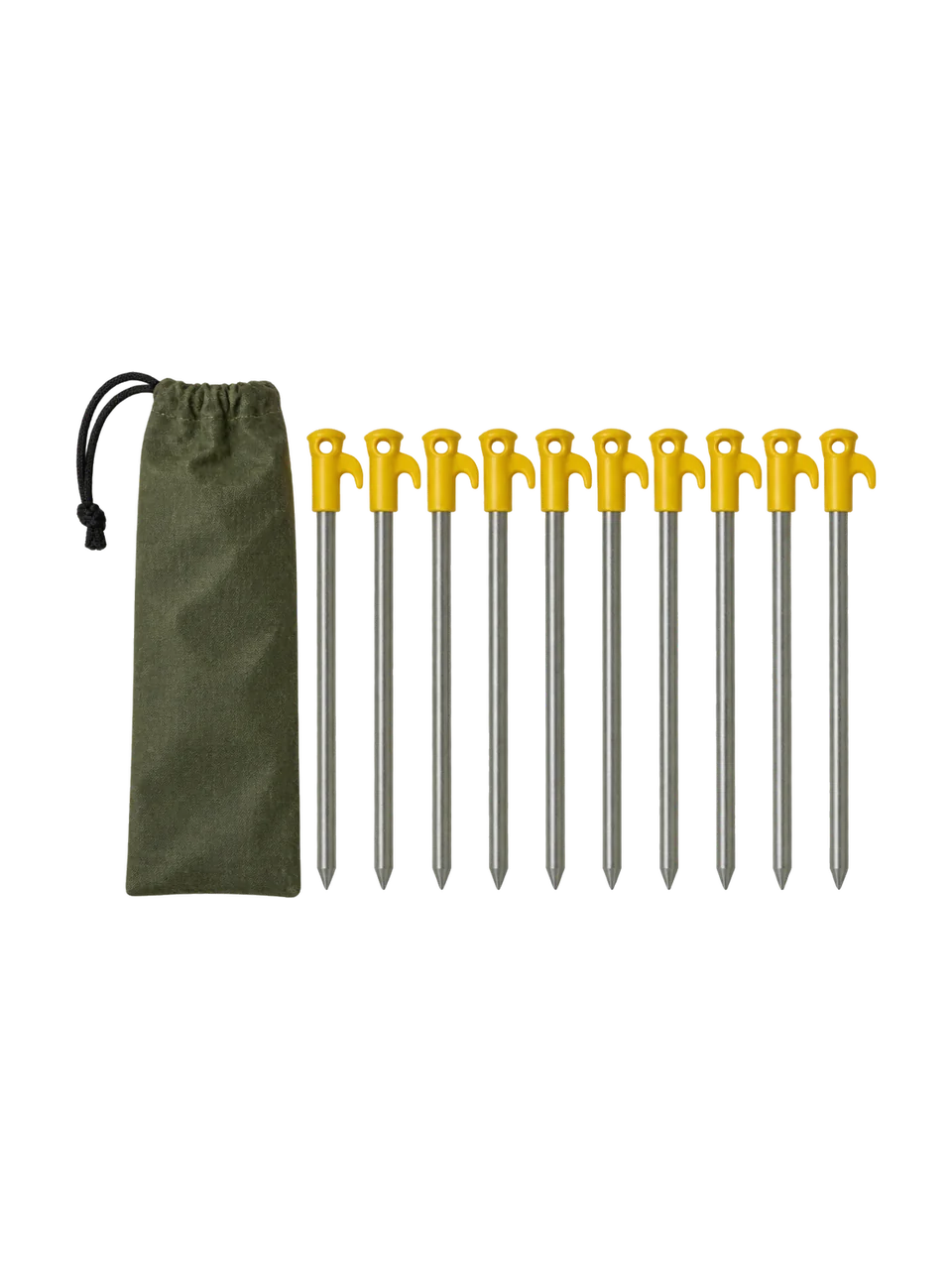
Pitch a tunnel tent with its back end into the wind, and peg out every guyline, including the ones along the sides. Dome-shaped tents shrug off gusts from any direction better, which helps on exposed coastal and hill sites. The pegs that come with most tents are fine for grass but bend in hard or stony ground, so a few rock pegs are worth packing.
Before the first trip
Pitch the tent in the garden or a park. You find out how long it takes and whether every peg and pole is in the bag, without rain or an audience. Our returns policy lets you pitch a new tent once at home to check the size, as long as it comes back clean and dry with all its pegs.
You can browse family tents online, and most of our larger shops have one pitched on the shop floor so you can stand up inside it.